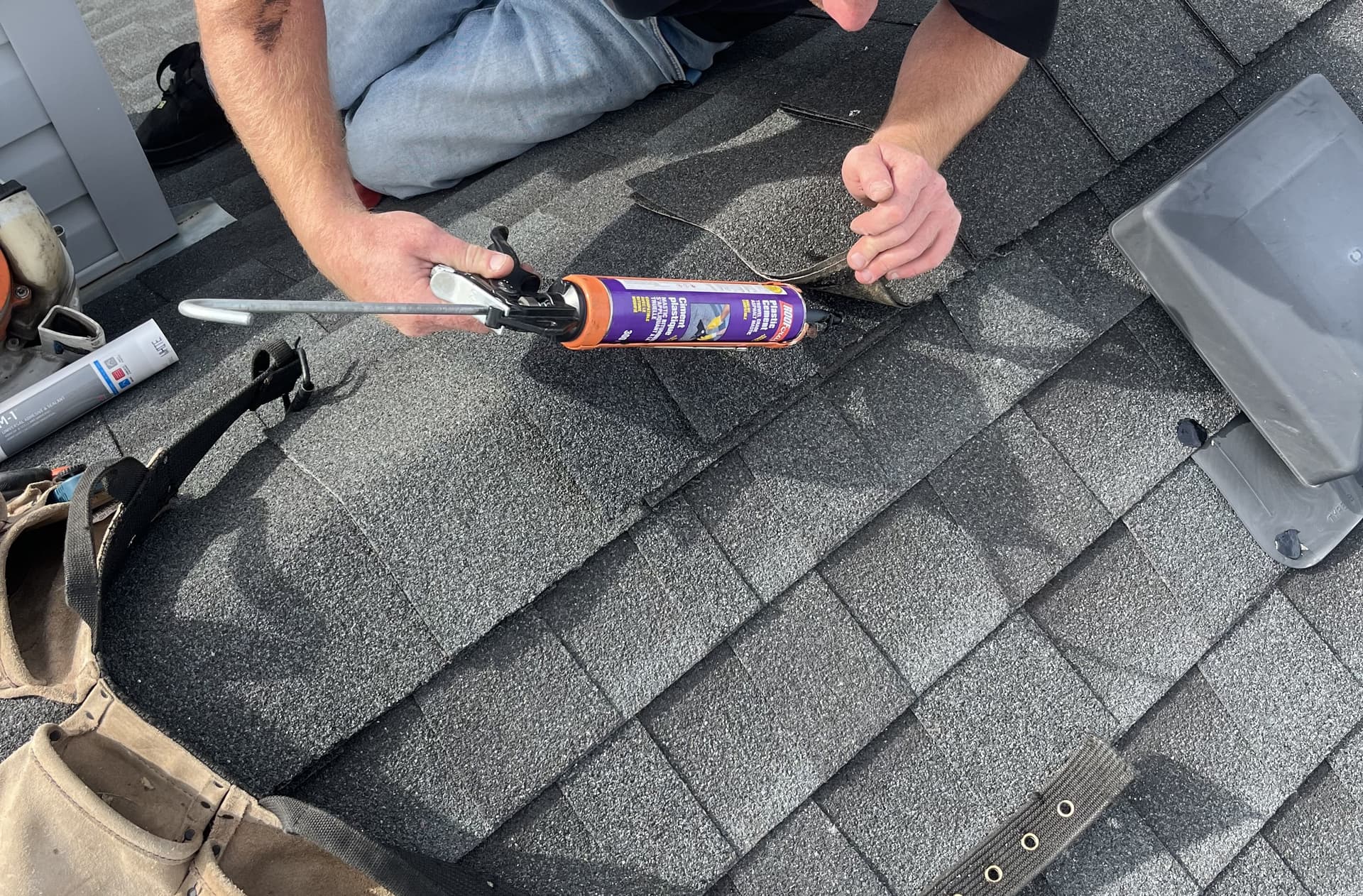
Roof repair Calgary

Calgary Roof Repair for Leaks, Wind and Storm Damage

Roof repair is for leaks, storm damage, missing shingles, flashing problems, vent issues, and targeted fixes where the rest of the roof may still have life left. The goal is to find the failure point and explain whether repair is enough.

Repair focus

  • roof leak repair and water-entry tracing
  • missing, lifted, or damaged shingles
  • hail and wind damage repairs
  • flashing repairs at walls, chimneys, skylights, and valleys
  • vent, pipe boot, and roof accessory issues
  • targeted maintenance fixes before they become interior damage

Leak, storm, and accessory repairs

Water often enters around transitions, penetrations, valleys, vents, and flashing before a homeowner sees a ceiling stain. Hail and wind can also loosen shingles, expose fasteners, damage roof accessories, or create weak points that show up later during heavy weather.

How a roof leak is narrowed down

The interior stain is evidence, but it is not always directly below the exterior opening. Water can follow decking, framing, underlayment, or a penetration before it becomes visible. A useful investigation starts with when the leak appears, then compares the interior location with roof slope, valleys, walls, plumbing vents, exhaust vents, chimneys, skylights, and previous repair areas above it.

On the exterior, the review should include shingle condition and fastening, flashings, sealant-dependent details, roof penetrations, exposed fasteners, transitions, and drainage. Where accessible and appropriate, attic conditions can add evidence such as staining, wet insulation, frost, or ventilation-related moisture. The objective is to define a credible repair area, not simply apply sealant to the closest visible joint.

What changes roof repair cost?

  • Roof height, pitch, access, and safe staging requirements
  • The size of the affected area and whether matching shingles are available
  • Valley, wall, chimney, skylight, or penetration flashing work
  • Decking or sheathing repairs discovered after materials are lifted
  • Ice and water membrane or underlayment needed to rebuild the detail
  • Roof accessories, ventilation changes, debris handling, and disposal

A photo or online estimate can establish context, but concealed damage and leak tracing may require an on-site assessment before a final repair scope is responsible.

Repairs that fail for avoidable reasons

Short-lived repairs often treat the symptom rather than rebuilding the failed detail. Common examples include surface caulking over a flashing problem, driving exposed fasteners through the shingle field, reusing brittle shingles, trapping water at a wall transition, or covering soft decking. Ventilation moisture can also resemble an exterior leak, so adding roofing material is not automatically the answer.

A repair should tie back into the surrounding water-shedding layers and leave a clear drainage path. If that cannot be achieved without disturbing a much larger area, the scope should say so before work begins.

What to expect from the repair process

  1. Describe the symptom, timing, storm history, and any earlier repairs.
  2. Inspect the relevant interior, attic, roof, and drainage details where access and conditions allow.
  3. Define the likely failure point, repair limits, materials, and any conditions that could change the scope.
  4. Remove only what is needed to expose and rebuild the detail, then replace damaged materials and integrate the repair with the surrounding roof.
  5. Review the completed work and explain what to monitor during the next suitable weather event.

Active water entry, storm damage, and uncertain causes are better suited to a direct assessment than an estimator-only path. Call 587-288-3351 to discuss the condition, or use the estimate tool when you already understand the approximate scope.

When repair is enough

Repair may be the right move when the issue is localized, the shingles still have usable life, matching material is available, and the roof deck and ventilation do not show broader failure signs.

When replacement should be considered

Replacement may be more responsible when repairs are stacking up, shingles are brittle or heavily granule-worn, storm damage is widespread, decking is compromised, or ventilation and flashing problems are part of a larger roof system failure.

Common Calgary roof repair calls

Repair requests often start with one visible symptom: a ceiling stain after a thaw, shingles on the lawn after a wind event, lifted tabs, exposed nails, loose flashing, cracked pipe boots, blocked exhaust vents, or hail bruising that needs documentation before it becomes a larger leak.

Recent repair proof by neighbourhood

Use local repair examples to compare the kind of work homeowners are requesting in Bowness, Harvest Hills, Evanston, and Oakridge, then move from the neighbourhood context to a specific repair estimate.

Need targeted roof repair pricing?

Start with an instant estimate and we can triage leak, storm, flashing, shingle, or roof accessory issues quickly.

Recent roof repair jobs in Calgary

Swipe or let the carousel auto-scroll through recent location-backed project updates. All posts are rendered in the page source for crawlable project discovery.

6 updates